Download Programme (pdf)
DAY #1 - MONDAY 4 MAY, 2026
Session 1. The Living Ocean – A Renewed Understanding of the Living Planet

What does it mean to be alive? The concepts of life and living organisms deserve renewed attention. The traditional materialistic perspective presents life and individuals as highly organised matter within a limited and closed space. However, any material organism continuously and fully renews itself through a perpetual exchange of matter, energy and information with its environment. The alternative processual perspective identifies life as a dynamic and open process rather than an object – as a wave that propagates and transforms, rather than a static block. This approach allows us to conceive of the Ocean and the Earth as a living organism at a planetary scale.

08:40-09:00 Meditation
09:00-10:15 Introduction
10:15-11:00 Conference
11:00-11:30 Coffee Break
11:30-13:15 Conferences
13:15-14:15 Lunch
14:15-15:00 Introspective Reconnection
15:00-16:45 Conferences
16:45-17:00 Coffee Break
17:00 - 17:45 Conference
17:45-18:15 Debate
18:15-20:15 Dinner
18:15-19:45 Workshop
21:00 Musical performance – Open to the general public
DAY #2 - TUESDAY 5 MAY, 2026
Session 2. Expanding Reality – New Approximations to Our Belonging to the Living Planet

The cognitive realisation of one’s environment is an entirely subjective process. An organism’s environment emerges through active exploration and participation, constituting what is known as enactive knowledge: reality arises from doing and living, rather than from thinking. This session will explore the links between emotions, place and narrative in our relationship with the Ocean, the history of marine sciences as a framework for cross-scalar reasoning, and the notion of the anima mundi and its connection to contemporary oceanic ecosystems.

08:40-09:00 Meditation
09:00-10:45 Conferences
10:45-11:15 Coffee Break
11:15-12:45 Conferences
12:45-13:45 Lunch
13:00-18:30 Field Session
20:30 Dinner for invited speakers
DAY #3 - WEDNESDAY 6 MAY, 2026
Session 3: A Common Future? The social implications of being part of the living planet

The climate and environmental crises are clear expressions of our lack of harmony with Nature. The over-exploitation of planet Earth by a minority impacts the most vulnerable populations and threatens the security of future generations. The recognition and lived experience that we all are Ocean can serve as a powerful antidote against individualism and selfishness. This session will address the rights of Nature, ecological justice, scientific-environmental diplomacy, citizen science, and the implications for personal and planetary health of our connection to the Ocean.

The climate and environmental crises compel us to rethink our relationship with the planet. Recognising that we are part of the Earth’s living organism, that we are Ocean, can provide an expanded cognition rooted in lived experience, capable of generating a feeling of true interconnection. At the core of that connection, at the essence of collaborative and hopeful work, we find genuine love –intense, total and permanent– as the driving force behind our reconnection with the living Earth.

08:40-09:00 Meditation
09:00-11:00 Conferences
11:00-11:30 Coffee Break
11:30-12:45 Conferences
12:45-13:45 Lunch
13:45-14:15 Introspective Reconnection
14:15-15:00 Conference
15:00-15:30 Debate
15:30-16:00 Closure
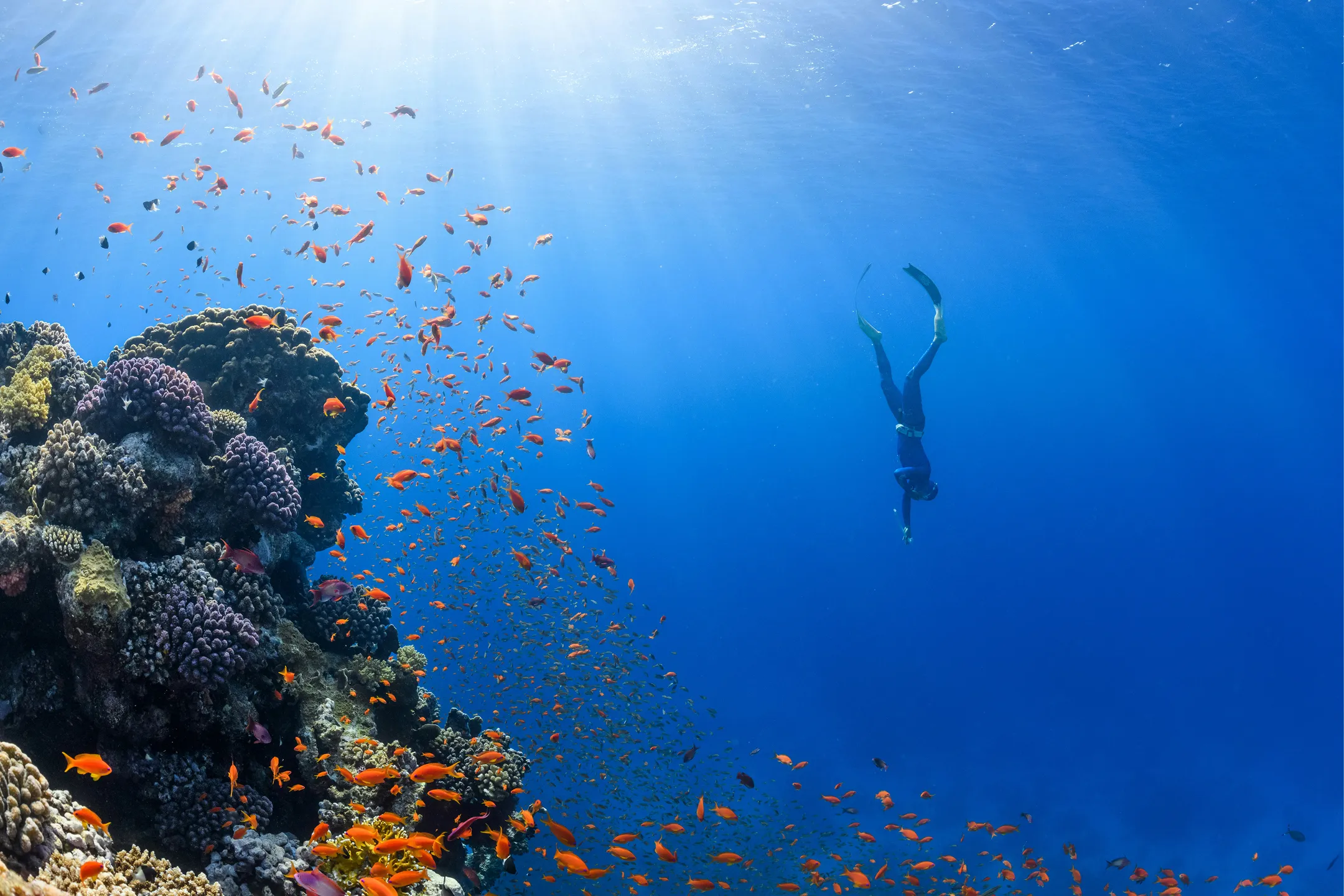
scuba diver exploring sea world
Registration

Attendance at the We-OCEAN workshop is free of charge but requires prior registration, which will be considered a a firm commitment to attend all three workshop days. Acceptance is conditioned to the number of applications, after consideration of the data and statement of interest provided at registration, and will be notified the first week of April. There is no need to register if you wish to join the live streaming of the conferences and debates, a link to the streaming platform will be published in this web several days previous to the workshop.

Registration deadline: 31 March 2026 (early registration is strongly encouraged).